Top 10 Best Utility Trailer Covers for Your Trailer Protection Needs?
When it comes to protecting your valuable investment, a Utility Trailer Cover is essential. These covers shield your trailer from harsh weather conditions, dust, and debris. They not only prolong the life of your trailer but also maintain its aesthetic appeal.
There is a wide variety of utility trailer covers available. Choosing the right one can be challenging. Consider factors like material, size, and ease of installation. Some covers are heavy-duty, while others may not withstand extreme conditions. It's important to select a cover that meets your specific needs.
Many users underestimate the importance of a good cover. A poor choice can lead to damage. Think about the long-term benefits of investing in quality protection. After all, your trailer serves multiple purposes, and keeping it in top condition should be a priority.
Important Features to Consider When Choosing Utility Trailer Covers
When choosing utility trailer covers, several features stand out.
Material quality is crucial.
Durable, weather-resistant fabrics prevent wear and tear.
Research indicates that covers made from high-denier polyester last longer and resist fading from UV exposure.
A well-constructed cover can extend the life of your trailer significantly, with some reports showing up to 50% longer usage.
Fit is another essential factor.
Covers should snugly fit the trailer’s dimensions.
A loose cover can lead to flapping in the wind, causing damage.
Look for adjustable straps or elastic hems.
These elements help ensure a secure fit.
A cover that fits poorly requires constant adjusting and can lead to frustration.
Storage capacity also needs attention.
Some covers come with pockets or compartments for added convenience.
This feature allows you to store small items like tie-downs or tools.
However, if the cover design is too complicated, it may not be user-friendly.
Simplicity is often more effective.
Finding the right balance between practicality and ease of use can be challenging, but it’s essential for overall satisfaction.
Top Materials Used in Utility Trailer Covers and Their Durability Ratings
When it comes to protecting your utility trailer, choosing the right cover is crucial. Many materials are available, each with different durability ratings. For instance, heavy-duty vinyl is popular due to its water resistance and UV protection. It can withstand harsh weather conditions. However, the downside is that prolonged exposure can lead to cracking.
Another option is polyester fabric. This material is lightweight and easy to handle. It often features a water-repellent coating. Yet, it may not hold up as well under heavy rain. Users sometimes find that it wears down faster than expected.
Canvas is another common choice. It boasts great breathability, which helps prevent mildew. However, it might not be as waterproof as expected. Users often report needing additional treatments to maintain its integrity. Selecting the right material is essential, but sometimes it requires trial and error. Understanding the trade-offs can lead to better decisions for your trailer’s protection.
Top 10 Best Utility Trailer Covers for Your Trailer Protection Needs
| Cover Material |
Durability Rating (1-10) |
Waterproof |
UV Resistance |
Breathability |
| Polyester |
8 |
Yes |
Excellent |
High |
| Vinyl |
9 |
Yes |
Good |
Medium |
| Canvas |
7 |
Yes |
Fair |
High |
| Polyethene |
6 |
Yes |
Good |
Low |
| Heavy-Duty Polyester |
10 |
Yes |
Excellent |
High |
| Woven Polypropylene |
8 |
Yes |
Good |
Medium |
| Ripstop Fabric |
9 |
Yes |
Excellent |
High |
| Nylon |
7 |
Yes |
Fair |
Medium |
| Breathable Mesh |
6 |
No |
Good |
High |
| Reflective Material |
8 |
Yes |
Excellent |
Low |
Comparison of Waterproof and Weatherproof Covers for Trailers
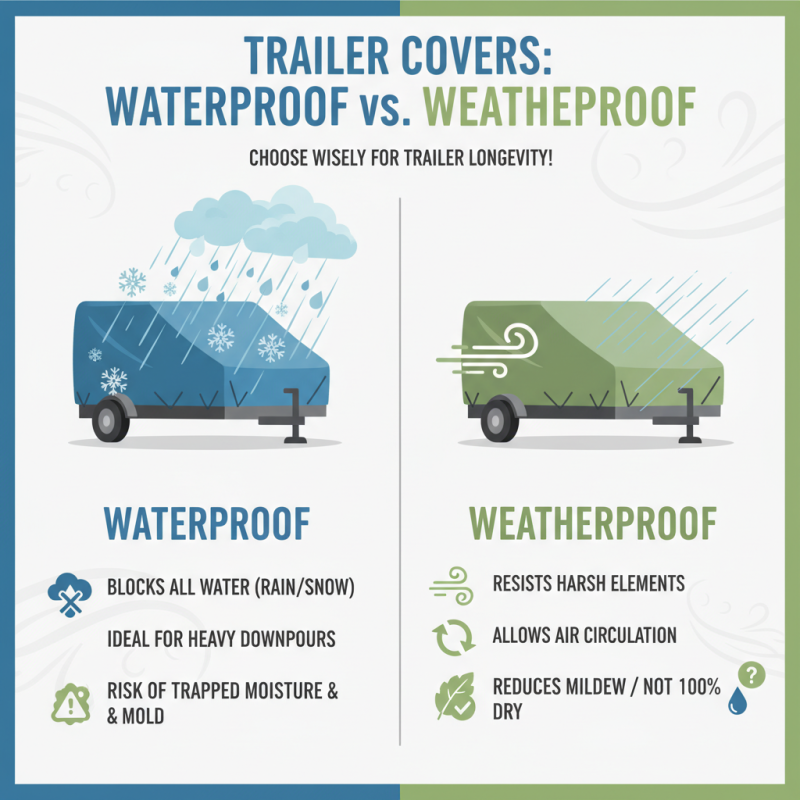
When choosing a trailer cover, understanding the difference between waterproof and weatherproof is crucial. Waterproof covers excel in keeping water out. They are perfect for heavy rain or snow. However, they might trap moisture inside, leading to mold growth. On a foggy day, condensation builds up. This moisture can damage your trailer's interior. Weatherproof covers can resist harsh elements. They allow air circulation while preventing rain infiltration. This might help prevent mildew. But they might not always keep out water completely.
Consider your specific needs. Do you live in a rainy area? Waterproof options might suit you better. However, if you face sun exposure or varying conditions, weatherproof covers could be ideal. Pay attention to material quality and construction. Some may not withstand extreme weather well. Look for sturdy zippers and reinforced seams. Ensure a snug fit to protect from dust and debris. Think about how often you'll use your trailer. You might want a cover that’s easy to put on and take off. A little research today can save headaches tomorrow.
Market Analysis: Top Brands for Utility Trailer Covers in 2023
As the demand for utility trailer covers rises, industry analysis reveals key trends in 2023. According to recent market reports, the growth of the trailer cover market is projected at 5% annually. This is driven by the increasing need for outdoor protection and the expanding trailer-use demographics.
Important choices exist within the material options for trailer covers. Heavy-duty polyester performs exceptionally well in various weather conditions. However, UV-resistant fabrics also show superior performance against sun damage. Consumers need to consider durability versus cost, leading to potential frustrations and frequent upgrades.
Tip: Regularly inspect your trailer cover for wear and tear. Small damages can escalate quickly. Make sure you choose a model that fits your trailer snugly. Loose covers can lead to flapping in the wind, causing further damage.
The variety in available designs means some covers may not fit trailer shapes perfectly. This mismatch can lead to disappointment. Ensure your chosen cover offers adjustable straps or elastic hems for a better fit. Remember, the wrong cover can compromise your trailer’s protection.
User Ratings and Reviews: Evaluating the Best Utility Trailer Covers
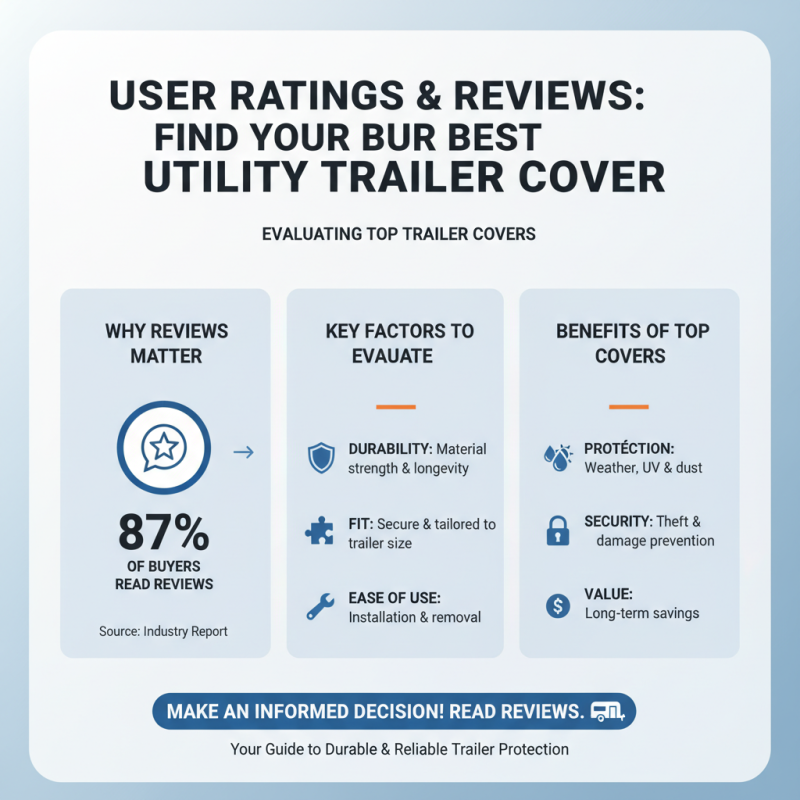
When choosing utility trailer covers, user ratings play a crucial role. A recent industry report highlights that nearly 87% of buyers rely on reviews before making purchases. This statistic emphasizes the need to consider what others say about a product. Evaluating durability, fit, and ease of use in user reviews can help you find the right cover.
Many users mention issues such as fade, wear, and inadequate fit. Sometimes, covers don’t live up to extensive marketing claims. It’s essential to read reviews and look for common complaints. A good cover should withstand various weather conditions, as roughly 30% of trailers endure extreme exposure.
Tips: Look for covers with UV protection. This can help prevent tearing and fading. Always measure your trailer before purchasing, ensuring a snug fit. Remember, not all covers are designed for heavy-duty use, so don’t overlook material quality. User satisfaction can vary. Some covers perform well initially but may not last over time.