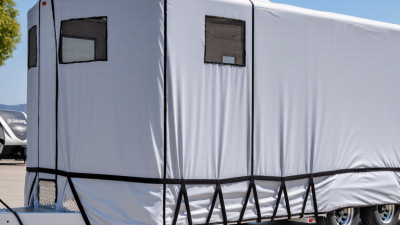
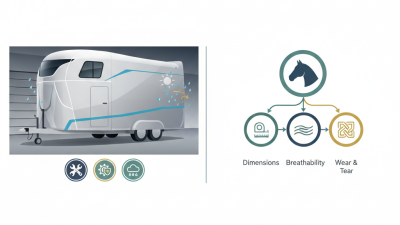
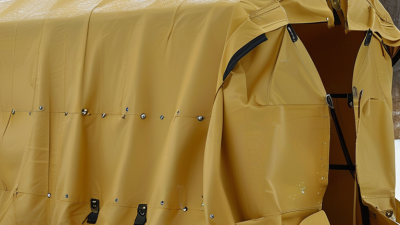
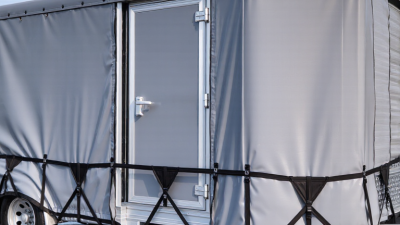
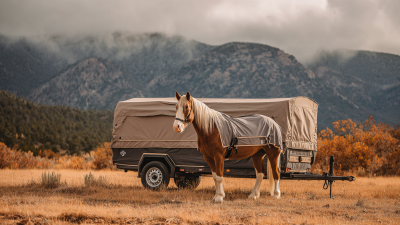
Choosing China’s top 10 Horse Trailer Cover manufacturers requires more than comparing glossy product photos. A reliable review should examine fabric density, waterproof performance, UV resistance, stitching quality, ventilation, and trailer fit. These details matter when a trailer sits under harsh sunlight, heavy rain, or blowing dust.
Equine behavior specialist Dr. Temple Grandin has often emphasized, “Horses are flight animals.” That reminder gives this topic practical meaning. A poorly fitted cover can flap loudly, collect water, or restrict access during loading. A well-designed Horse Trailer Cover should protect the trailer while supporting calm, safe handling.
This guide evaluates leading Chinese manufacturers through several purchasing lenses. Factory experience matters. So do material transparency, sample quality, production consistency, and after-sales support. Buyers should request fabric specifications, seam photographs, packaging details, and realistic delivery times. Some suppliers advertise premium performance without publishing meaningful test data. That deserves careful questioning.
The strongest manufacturers may offer custom dimensions, breathable panels, reinforced corners, and branded packaging. However, “top 10” should not be treated as an absolute ranking. Market data changes, and online claims can be incomplete. A factory with excellent export experience may still provide a weak design for an unusual trailer model. That happened before.
This introduction therefore focuses on evidence, not exaggerated promises. It considers practical use, manufacturing capability, and long-term value. The final choice should reflect climate, storage conditions, trailer measurements, and the horse’s transport routine. Small details often decide whether a cover remains useful after one demanding season.
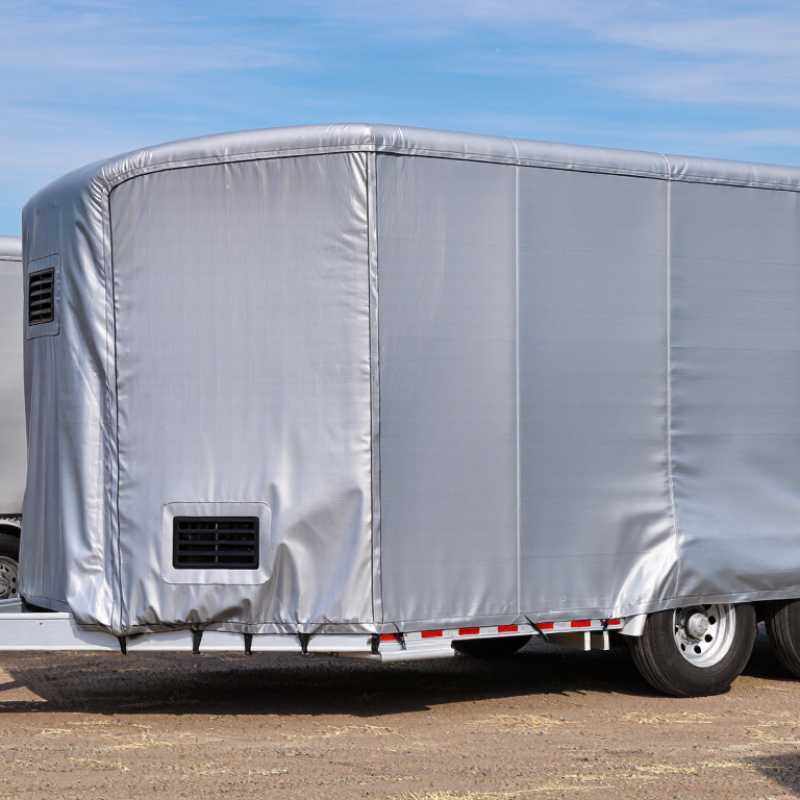
A reliable horse trailer cover manufacturer begins with real field experience. Covers face road spray, sharp corners, intense sunlight, and repeated folding. The American Horse Council Foundation’s 2023 study estimated 6.6 million horses in the United States, supporting a large and demanding transport market. Manufacturers should understand loading routines, ventilation needs, and common abrasion points.
Material evidence matters. A supplier should provide fabric weight, coating type, waterproofing results, and ultraviolet-aging test conditions. ASTM G154 testing can reveal how synthetic materials react to prolonged UV exposure. Seams deserve equal attention. Look for reinforced stitching, corrosion-resistant hardware, and stress testing around straps and buckles. Small details matter.
Quality systems also reveal reliability. The ISO Survey 2023 reported more than 1.26 million valid ISO 9001 certificates worldwide. Certification does not guarantee a perfect cover, but it indicates documented production controls and corrective procedures. Ask for inspection records, batch traceability, and clear replacement policies. A factory that avoids these questions may still produce attractive samples. That is not enough.
I have seen covers fail at the corners first. Poor measurements often cause the problem. Reliable manufacturers confirm trailer dimensions, mirror positions, vents, and rear access before cutting fabric. They should also provide prototypes or fitting samples. Even experienced teams make mistakes. The valuable difference is whether they measure, test, and correct them openly.
A practical, brand-neutral evaluation table for comparing horse trailer cover manufacturers in China. The criteria below are based on recognized textile, quality-control, chemical-compliance, and product-testing practices rather than unverified company rankings.
| Rank | Reliability Dimension | Evidence a Reliable Manufacturer Should Provide | Relevant Standard or Test Method | Practical Benchmark | Buyer Verification Method |
|---|---|---|---|---|---|
| 1 | Fabric Construction | A complete material specification showing fiber type, fabric weight, weave or knit construction, coating type, and production tolerance. | ISO 3801 for fabric mass per unit area; supplier technical data sheet and retained production samples. | The specification should remain consistent between approved samples and bulk production, with clearly defined tolerances. | Compare the approved sample, laboratory report, and random bulk-production sample before shipment. |
| 2 | Water Resistance | Test results for the finished cover, including fabric panels, seams, zippers, openings, and attachment areas. | AATCC 22 for spray rating; AATCC 127 or ISO 811 for hydrostatic pressure, where applicable. | The manufacturer should define a measurable water-resistance requirement instead of using only terms such as “waterproof” or “water-resistant.” | Request a test report for the finished construction and inspect seams after simulated rain or water exposure. |
| 3 | UV and Weather Resistance | Information about UV-stabilized fibers, coatings, colorants, and accelerated-weathering evaluation. | AATCC 16.3 or ISO 105-B02 for textile colorfastness to light; ASTM G154 may be used for accelerated UV exposure. | The test duration, exposure conditions, color-change rating, and strength-retention requirement should be documented. | Review the original test conditions and request a sample exposed to outdoor or accelerated-weathering conditions. |
| 4 | Tear and Tensile Strength | Strength data for the base fabric and high-stress areas such as corners, straps, pockets, and fitted edges. | ASTM D5034 or ISO 13934-1 for tensile strength; ASTM D2261 or ISO 13937-2 for tear strength. | Requirements should be established for both machine and cross directions, with separate criteria for reinforcement zones. | Check laboratory results and inspect whether reinforcement is properly stitched rather than only added cosmetically. |
| 5 | Seam and Stitch Quality | A documented sewing specification covering stitch density, seam allowance, thread type, bartacks, binding, and seam-sealing details. | ASTM D1683 can be used to evaluate sewn-seam failure in textile products; internal workmanship standards should also be defined. | Seams should be even, securely locked, free of skipped stitches, and reinforced at load-bearing points. | Inspect inside and outside seams, pull-test attachment points, and review first-piece inspection records. |
| 6 | Fit and Pattern Accuracy | Approved dimensional drawings, pattern files, tolerance tables, and fit samples made on the intended trailer profile. | ISO 3759 may support textile dimensional-change evaluation; product-specific pattern and measurement controls are also required. | Critical dimensions should have documented tolerances, and the cover should not obstruct ventilation, doors, lights, wheels, or legally required markings. | Test the cover on the target trailer model and measure critical points before approving bulk production. |
| 7 | Quality Management System | Documented incoming-material inspection, in-process inspection, final inspection, corrective-action records, and traceability procedures. | ISO 9001 provides a recognized framework for quality-management systems; ISO 2859-1 supports acceptance sampling by attributes. | Each production lot should be traceable to raw materials, operators, inspection records, and shipment documentation. | Request a valid certificate where claimed, audit the inspection process, and review recent nonconformity records. |
| 8 | Chemical and Regulatory Compliance | Material declarations and test reports covering restricted substances, coatings, dyes, prints, trims, and packaging components. | REACH Regulation (EC) No. 1907/2006 for the European market; additional destination-market requirements may apply. | Reports should identify the tested material, test date, laboratory, applicable limits, and destination market. | Confirm that reports match the actual production materials and are issued by a competent independent laboratory. |
| 9 | Sampling and Pre-Shipment Inspection | A documented sample-approval process, inspection checklist, defect classification, and shipment-release procedure. | ISO 2859-1 is commonly used for lot-by-lot attribute sampling and acceptance decisions. | The inspection plan should define critical, major, and minor defects, sample size, acceptance limits, and corrective actions. | Use an independent inspection company or conduct a recorded pre-shipment inspection against the approved golden sample. |
| 10 | After-Sales Support and Warranty Control | Written warranty terms, replacement-part policy, complaint-response process, root-cause analysis, and corrective-action records. | ISO 9001 customer-feedback and corrective-action principles can support a structured after-sales process. | Warranty coverage should specify fabric, seams, fasteners, zippers, accessories, exclusions, claim evidence, and response time. | Review the contract, warranty document, service contact, spare-part availability, and anonymized claim-resolution records. |