How to Choose a Strong Demon Tarp in 2026?

Choosing a Strong Demon Tarp in 2026 is less about impressive labels and more about dependable performance. A tarp may face sharp branches, wet ground, sudden wind, and repeated packing. Those moments expose weak fabric quickly. Field experience shows that a sturdy feel alone proves little. Check the fabric weight, weave, coating, seam construction, and reinforced tie-out points. Small details matter.

A practical review should connect specifications with real use. Does the tarp stay taut after several hours of rain? Can its corners handle adjustable guylines without stretching? Is the coating still flexible after cold storage? Look for clear material information, measured dimensions, tested load guidance, and transparent care instructions. Manufacturer claims deserve comparison. Independent field reports can help, although they reflect different weather, terrain, and setup habits.

This guide explains how to assess a Strong Demon Tarp before spending money. It considers durability, weather resistance, packability, repair options, and long-term value. It also separates useful evidence from vague marketing language. There is no perfect tarp for every campsite. A heavier model may feel safer but burden a long hike. A lighter model may save space yet demand gentler handling. That trade-off is easy to overlook. Your first choice may not be perfect. Recheck it after real use. Choose according to your actual trips, not an ideal adventure that rarely happens.
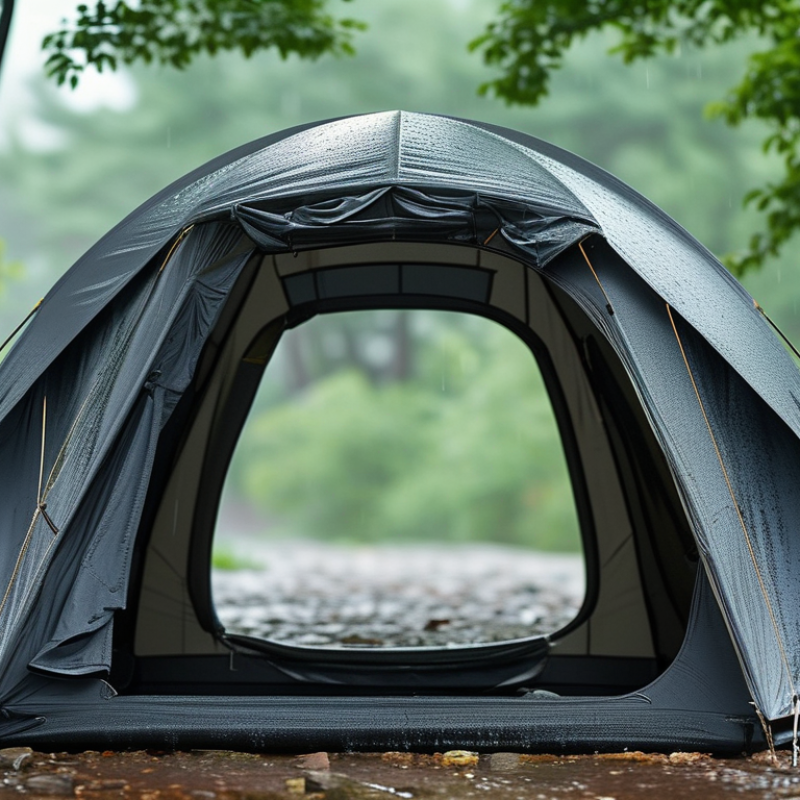
How to Choose a Strong Demon Tarp in 2026?

Define a Strong Demon Tarp by Use, Size, and ASTM D751 Performance Tests

A strong demon tarp should be chosen for its job, not its appearance. A temporary cover needs different strength from a ground sheet or equipment shelter. In field use, I check the expected load, wind exposure, moisture, and contact with rough surfaces. A tarp used over sharp timber needs better tear resistance than one covering smooth cargo.

Size matters more than many buyers expect. Measure the covered area, then allow extra material for edge folding and secure fastening. Too little fabric leaves tension on the grommets. Too much fabric can flap violently in wind. For a practical fit, I prefer enough overlap to protect the sides without creating a loose, noisy sail. Small details matter.

ASTM D751 performance tests provide useful evidence, but one result cannot define a strong tarp. Check reported breaking strength, tear resistance, coating adhesion, and hydrostatic resistance. Ask whether the test used the finished fabric, not only a laboratory sample. Also review the test direction, specimen size, and conditioning method. Numbers without test conditions can mislead.

I would inspect reinforced corners, stitching density, grommet attachment, and coating consistency by hand. A heavy fabric may still fail at a weak corner. That mistake is easy to miss. In my experience, published results deserve careful questions, especially when wind loads are uncertain. No tarp is strong in every situation. Choose performance that matches the real use, size, and installation method.
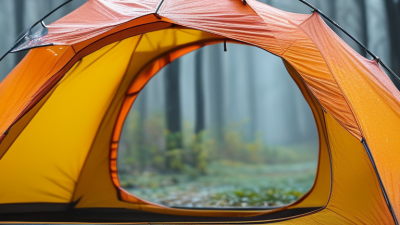
Compare 500D–1000D Fabrics, GSM, Ripstop Weave, and Tear Strength

How to Choose a Strong Demon Tarp in 2026?

A strong tarp starts with the fabric, not the product label. Fabrics from 500D to 1000D offer different balances between weight, abrasion resistance, and handling. A 500D tarp is easier to carry and often suits moderate weather. A 1000D tarp feels tougher under sharp ground contact, but it adds bulk. Denier alone does not prove strength.

Check GSM beside denier. Higher GSM usually means more material, but not automatically better performance. A dense 700D fabric can outperform a poorly coated 1000D fabric. Look for a tight ripstop weave, where thicker reinforcement threads limit damage from spreading. Tear strength also matters. It shows how much force can enlarge an existing cut. In field use, a small puncture near a stressed corner can become a long split quickly.

Tips

Compare tear strength values using the same test method. Inspect stitching, webbing, and corner reinforcement by hand. A reinforced corner should not feel thin or loose. For wet camps, test the coating and seam sealing, not only the face fabric.

I once overvalued fabric thickness and ignored weak attachment points. That was a useful mistake.

A slightly lighter tarp with strong seams may perform better than a heavy sheet with poor construction. Carrying comfort matters too. An impressive specification becomes less useful when the tarp stays at home.

Check Waterproofing Against ISO 811 Hydrostatic-Pressure Benchmarks

A strong demon tarp starts with verified waterproofing, not a dramatic fabric label. ISO 811 measures hydrostatic pressure by raising water pressure beneath fabric until leakage appears. A 10,000 mm result equals roughly 98 kPa of pressure. However, ISO 811 does not define one universal pass mark for every shelter.

Look for independent test records, not vague claims. Around 1,500 mm may resist light rain, while 5,000 to 10,000 mm offers more practical protection during sustained storms. These figures are industry buying guides, not ISO requirements. The 2024 Outdoor Industry Association Participation Trends Report recorded continued demand for camping and outdoor recreation, increasing the need for dependable shelter equipment. Water resistance remains only part of the test.

Inspect taped seams, corner reinforcements, and the coating’s underside. During field checks, place the tarp over wet grass for several hours, then examine the sleeping area and seam lines. Small leaks often appear there first. The 2024 Textile Exchange Materials Market Report notes that polyester represented about 59% of global fiber production, making it common in technical outdoor textiles. Yet fiber content alone proves little. A fabric can score well in a laboratory and fail after abrasion, folding, or poor storage. I would question any hydrostatic result without test date, sample construction, and laboratory method. Real weather is less tidy.

Evaluate UV Resistance Using ASTM G154 Exposure-Test Ratings

How to Choose a Strong Demon Tarp in 2026?

Evaluate UV Resistance Using ASTM G154 Exposure-Test Ratings

A durable tarp needs more than thick fabric and reinforced corners. Its coating must resist sunlight, heat, and repeated moisture. ASTM G154 helps evaluate this performance through controlled ultraviolet exposure. It is a testing practice, not a universal UV-resistance score.

Look for the lamp type, irradiance, exposure hours, and cycle details. UVA-340 lamps often simulate sunlight in the critical UV range. Some tests alternate UV exposure with condensation or water spray. That matters because outdoor tarps rarely stay dry. A report showing 1,000 hours means little without these conditions.

Read the results beside the original sample. Check tensile strength, tear resistance, coating adhesion, color change, and cracking. A tarp that still looks dark may already have weakened stitching. Appearance can mislead. It often does.

I once considered high exposure hours enough evidence. That was too simple. Different laboratories can use different cycles, specimen sizes, and evaluation methods. Ask for the complete ASTM G154 report, not only a marketing number. Compare results from the same test setup. Also inspect seams and eyelets, because UV damage often appears there first. A practical field check helps: hold the fabric toward bright light, flex a seam, and examine powdery coating or brittle fibers. ASTM data builds confidence, but real weather remains less predictable.

How to Choose a Strong Demon Tarp in 2026? - Evaluate UV Resistance Using ASTM G154 Exposure-Test Ratings

Tarp Construction Typical UV-Stabilization Approach Suggested ASTM G154 Screening Exposure Target Tensile-Strength Retention* Target Tear-Strength Retention* Color Change Target* UV-Resistance Assessment Best Use Profile
Solution-dyed polyester with acrylic or PU coating Pigment is incorporated into the polymer before fiber formation; coating may include UV stabilizers. 1,000–2,000 hours ≥80% ≥75% Grade 4 or better Excellent Long-term outdoor shelters, repeated seasonal exposure, and high-sun environments.
Solution-dyed acrylic fabric Color is distributed through the fiber, helping limit surface-only fading; often used with water-repellent finishes. 1,000–2,000 hours ≥80% ≥75% Grade 4 or better Excellent Permanent or semi-permanent shade structures where appearance retention matters.
PVC-coated polyester scrim Polyester reinforcement provides dimensional stability; PVC formulation may contain UV absorbers and stabilizers. 1,000–2,000 hours ≥75% ≥75% Grade 3–4 or better Very good Heavy-duty covers, equipment protection, and applications requiring high abrasion resistance.
Woven polyethylene with UV inhibitor UV stabilizer is blended into polyethylene resin; laminated surfaces may improve water resistance. 500–1,000 hours ≥65% ≥60% Grade 3 or better Good General-purpose tarps, temporary shelters, landscaping, and moderate outdoor exposure.
PU-coated nylon Lightweight nylon substrate with polyurethane coating; UV durability depends strongly on denier, coating, and stabilizer package. 500–1,000 hours ≥60% ≥55% Grade 3 or better Moderate to good Lightweight portable shelters where low packed weight is more important than maximum service life.
Untreated or minimally stabilized woven fabric Limited UV protection; surface coating and fiber type may provide only short-term resistance. 250–500 hours ≥50% ≥45% Grade 2–3 Limited Short-term, shaded, indoor, or emergency use with limited direct sunlight.
How to read the table: ASTM G154 is a laboratory exposure practice, not a universal product-rating scale. A common screening cycle uses UVA-340 fluorescent UV exposure followed by condensation; exposure hours are laboratory hours and should not be converted directly into outdoor service years.

*Performance targets: Retention values compare the exposed specimen with an unexposed control. Color-change targets refer generally to a blue-wool or comparable visual scale, where a higher grade indicates less visible fading. Confirm the exact UV lamp type, irradiance, temperature, cycle, specimen orientation, and test report before making a procurement decision.

Verify Seams, Reinforcements, Hardware, and Safe Working Load Data

How to Choose a Strong Demon Tarp in 2026?

A strong Demon Tarp should survive inspection, not just look thick. Start with the seams. ASTM D751 evaluates coated fabrics through breaking strength, tear strength, and seam strength tests. Ask for actual test values, fabric weight, and test conditions. “Heavy-duty” is not a measurement. I once trusted a reinforced corner that looked solid, yet its stitching stopped short of the load patch. That detail matters.

Inspect every stress point. Reinforcement patches should extend beyond the eyelets, with dense, even stitching and no skipped threads. Metal hardware needs smooth edges, corrosion resistance, and secure attachment. Grommets should not twist inside the fabric. Pull gently by hand. Movement can reveal weak installation. A tarp may fail at the hardware before the fabric tears.

Safe working load data must be specific. OSHA 1910.184 requires lifting slings to show rated capacities, but a general tarp is not automatically a lifting sling. Never convert breaking strength into a working load without the manufacturer’s tested safety factor. Look for load direction, attachment method, temperature limits, and inspection intervals. The 2023 BLS Census recorded 1,069 construction fatalities, reminding buyers that small equipment choices can carry serious consequences. If the data sheet lists only maximum tensile strength, pause. It is incomplete. Ask for third-party testing, batch traceability, and written limits before choosing a tarp for demanding work.