How to Choose the Best Polyethylene Lumber Tarp Supplier in China?
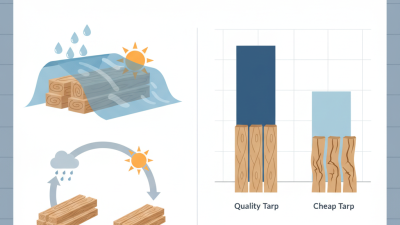
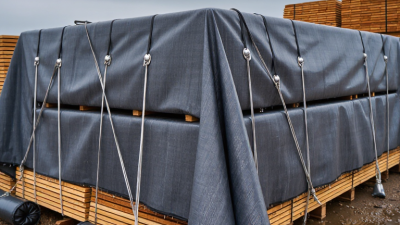
Choosing the right Polyethylene Lumber Tarp supplier in China requires more than comparing catalog prices. The supplier must understand lumber transport, weather exposure, and repeated handling. A dependable tarp should resist tearing, moisture, ultraviolet damage, and abrasion from sharp timber edges. Small details matter.
Begin by checking the fabric specification, coating quality, thickness, and finished weight. Ask for clear test reports and a physical sample before approving production. Inspect the stitching around hems, D-rings, pockets, and reinforced corners. These areas often fail first when tarps face tension, wind, and frequent folding. A capable manufacturer should explain material choices in practical terms, not hide behind vague claims.
Factory experience also deserves close attention. Review production photographs, quality-control procedures, inspection records, and export references from comparable transport markets. Confirm whether the supplier can maintain consistent dimensions, color, packing, and delivery schedules. Communication is another useful test. Questions should receive specific answers, supported by drawings, samples, or measurable data. Be careful with unusually low quotations. They may reflect thinner fabric, weaker thread, or incomplete testing. However, an expensive offer is not automatically reliable. That assumption needs challenging.
A strong evaluation includes a sample inspection, a written specification, and an agreed defect-handling process. Discuss customization carefully, including logo printing, tarp size, eyelet spacing, and folding methods. Consider the supplier’s response after the sale, too. A trustworthy partner accepts reasonable scrutiny and documents its commitments. No checklist is perfect. Still, careful verification can reduce costly surprises and help buyers select a Polyethylene Lumber Tarp supplier with practical expertise, stable quality, and dependable long-term performance.
Define Tarp Requirements: PE Density of 0.91–0.97 g/cm³ and GSM
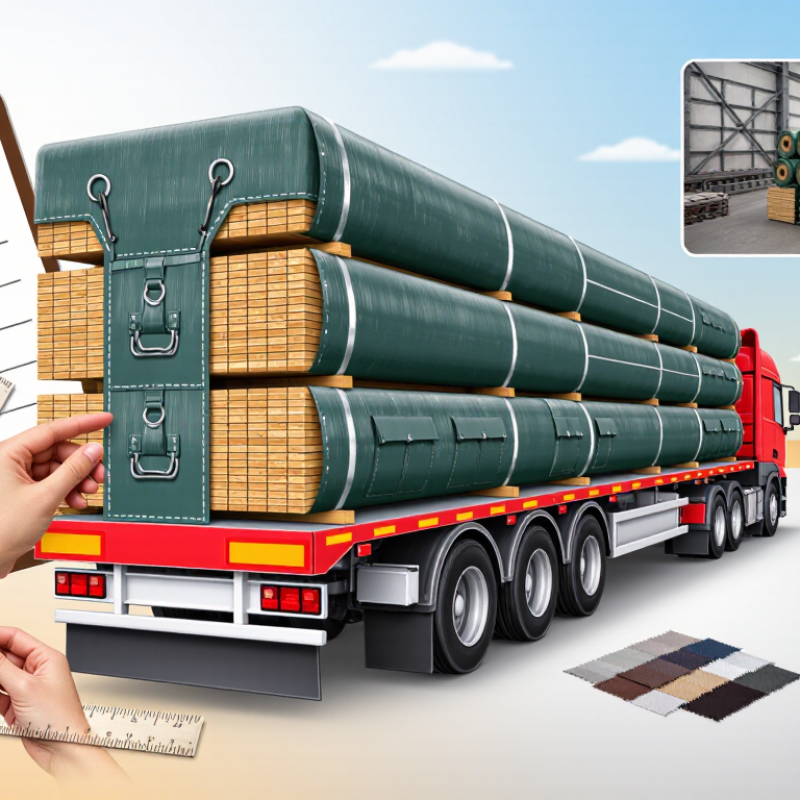
When choosing a polyethylene lumber tarp supplier in China, define the material before comparing prices. Request polyethylene density between 0.91 and 0.97 g/cm³. Density affects flexibility, tear resistance, and cold-weather performance. Lower-density PE usually feels softer and bends easily. Higher-density PE can provide stronger structure, but excessive stiffness may reduce handling comfort.
GSM means grams per square meter. It shows the tarp’s fabric weight, not simply its thickness. A supplier should state GSM separately for the woven layer, coating, and finished tarp. Otherwise, comparisons become unreliable. Ask for a laboratory report, production specification, and a physical sample. Weigh a clean, dry sample with a calibrated scale. Measure its area carefully. Small cutting errors can change the result.
Do not judge quality by touch alone. A heavy tarp may contain extra coating rather than stronger woven fabric. Check density and GSM against tear strength, seam construction, UV treatment, and waterproofing results. Request batch testing records, because material values can shift during production. A common mistake is accepting one sample as proof of every future shipment. It is not enough. Include acceptable ranges in the purchase specification, such as a target GSM and permitted tolerance. Supplier explanations should be clear, testable, and supported by dated documents.
Compare Fabric Strength and Tear Resistance Under ISO 1421 and ASTM D2261
Choosing a polyethylene lumber tarp supplier requires more than checking thickness or surface appearance. Fabric strength and tear resistance reveal different weaknesses. ISO 1421 measures tensile strength and elongation of coated fabrics. It shows how much force the material withstands before breaking.
ASTM D2261 measures tongue tear strength. A cut is pulled through the fabric, imitating damage spreading from a puncture or edge. These tests are not interchangeable. A tarp may show high tensile strength but tear easily after a small cut. Request results for both warp and weft directions. Ask for test units, specimen sizes, conditioning details, and production batch numbers.
Look closely at the test report. The laboratory name, test date, method edition, and failure mode should be visible. Compare similar polyethylene constructions, not unrelated fabric weights. A reliable supplier can explain why one direction performs differently. They should also provide seam, grommet, and cold-flex data for lumber transport.
Field details matter. Check whether the tarp remains flexible after folding, dragging, and repeated loading. Inspect a sample around reinforced corners. Small holes often begin there. This comparison is not perfect, because laboratory pulling differs from wind, abrasion, and sharp timber edges. Still, consistent ISO 1421 and ASTM D2261 results create a stronger basis for supplier selection. Some reports look impressive, yet omit tear direction or batch variation. That omission deserves a careful question.
How to Choose the Best Polyethylene Lumber Tarp Supplier in China?
Fabric Strength and Tear Resistance Under ISO 1421 and ASTM D2261
This anonymized screening dataset compares polyethylene tarp fabric grades using tensile strength reported in N/5 cm under ISO 1421 and tongue tear resistance reported in N under ASTM D2261. Higher values generally indicate greater resistance to pulling and tearing. ISO 1421 and ASTM D2261 define test procedures rather than universal pass/fail limits, so buyers should compare certified laboratory results against their own application requirements.
Verify UV Durability and Waterproofing with ASTM G154 and Hydrostatic Tests
Choosing a polyethylene lumber tarp supplier requires more than checking thickness or a low quotation. Ask for complete ASTM G154 records, including lamp type, irradiance, temperature, exposure cycles, and visual changes. A commonly used fluorescent UV-A condition is 0.89 W/m²/nm at 340 nm. However, cycle counts differ between laboratories.
ASTM G154 is an exposure method, not a guaranteed outdoor lifetime. That detail matters. A supplier should compare aged fabric with an unaged control, reporting tensile strength, elongation, color, cracking, and coating loss. A strong result after 1,000 hours can still fail beside a hot truck bed. I have seen samples remain flexible while their stitching weakened first.
Waterproofing needs measured evidence, not phrases such as “fully waterproof.” Request hydrostatic testing under ASTM D751 or ISO 811, with pressure, test duration, and leakage records clearly stated. Hydrostatic pressure should be reported in millimeters of water or kilopascals. Ask whether testing covers the woven sheet, seams, hems, and repair points. It often does not.
Technical reports from ASTM-based laboratories commonly show that aging can reduce polymer strength before visible holes appear. Therefore, request both initial and post-UV hydrostatic results. Also inspect three production lots, not one perfect sample. Supplier documentation is useful. Independent retesting is safer. A small crease, weak eyelet, or poorly sealed seam may expose weaknesses that laboratory sheets miss.
Audit Chinese Suppliers Through ISO 9001, MOQ, Capacity, and Lead-Time Data
How to Choose the Best Polyethylene Lumber Tarp Supplier in China?
A reliable audit starts with evidence, not polished factory photos. The ISO Survey 2022 recorded more than 1.2 million ISO 9001 certificates worldwide. That number makes verification essential. Request the certificate number, issuing body, covered site, and product scope. Check whether it covers tarp production, not only trading or administration. Review internal audit findings and corrective-action records. I once accepted an ISO certificate without checking its scope. That was a costly assumption.
Measure MOQ against your actual buying rhythm. Ask whether the MOQ applies to each color, size, coating, or combined order. Compare prices per finished square meter, including edge reinforcement and grommets. Capacity claims also need numbers. Request monthly output, working shifts, loom count, coating-line speed, and recent production records. PlasticsEurope reported global plastics production at 400.3 million tonnes in 2022. Scale is large, but usable capacity can still be limited during peak seasons. Ask for three recent production samples.
Tips: Request a 12-month lead-time table. Separate production days from inspection and shipping days. Compare promised dates with actual loading dates. The UNCTAD Review of Maritime Transport 2023 highlights continuing volatility in maritime logistics. Therefore, ask for an agreed delay-notification process and buffer days. A supplier promising seven days may exclude testing, rework, or port handling. That detail matters. Also, test UV resistance, tear strength, seam quality, and waterproofing through an independent laboratory. Photos are useful, but test reports are stronger.
How to Choose the Best Polyethylene Lumber Tarp Supplier in China? — Audit Chinese Suppliers Through ISO 9001, MOQ, Capacity, and Lead-Time Data
Anonymized supplier audit comparison for polyethylene lumber tarps and related heavy-duty polyethylene covers
| Supplier Code |
ISO 9001 Status |
Certificate Validity |
Product Scope |
MOQ |
Monthly Capacity |
Standard Lead Time |
Custom Lead Time |
Material & Fabrication |
Quality Evidence |
Audit Score |
Risk Level |
| Supplier A |
Certified |
Valid through 2027 |
PE lumber tarps, flatbed covers, custom truck tarps |
300 pieces |
45,000 pieces/month |
18–22 days |
25–30 days |
Woven polyethylene fabric; heat-sealed hems; reinforced corners |
Incoming-material inspection, in-process records, final AQL inspection |
91/100 |
Low |
| Supplier B |
Certified |
Valid through 2026 |
Heavy-duty PE tarps, lumber covers, industrial protective sheets |
500 pieces |
60,000 pieces/month |
20–25 days |
28–35 days |
UV-stabilized polyethylene; stitched and welded options; webbing reinforcement |
Batch traceability, tensile-strength reports, packing inspection records |
88/100 |
Low |
| Supplier C |
Documentation Review |
Copy supplied; original pending verification |
PE tarps, cargo covers, construction and agricultural covers |
1,000 pieces |
80,000 pieces/month |
25–30 days |
35–45 days |
Coated polyethylene; reinforced eyelets; sewn hems |
Basic final inspection; limited batch-level test documentation |
76/100 |
Medium |
| Supplier D |
Certified |
Valid through 2028 |
Large-format lumber tarps, flatbed tarps, waterproof PE covers |
200 pieces |
32,000 pieces/month |
15–20 days |
23–28 days |
High-density polyethylene; double-stitched edges; D-ring or grommet options |
Documented corrective actions, final inspection checklist, sample retention |
93/100 |
Low |
| Supplier E |
Certified |
Valid through 2027 |
Standard PE tarps and low-to-medium duty cargo covers |
800 pieces |
70,000 pieces/month |
22–28 days |
30–38 days |
Polyethylene-coated woven fabric; standard eyelets; optional rope hems |
Material certificates available; inspection system less detailed for custom orders |
82/100 |
Medium |
| Supplier F |
Not Verified |
Certificate not provided |
PE lumber tarps, truck covers, export packaging covers |
1,500 pieces |
95,000 pieces/month |
28–35 days |
40–50 days |
Woven PE fabric; sewn construction; standard reinforcement materials |
Commercial inspection accepted; limited internal quality records supplied |
68/100 |
Medium |
| Supplier G |
Certified |
Valid through 2026 |
Premium industrial PE covers and customized lumber tarps |
400 pieces |
38,000 pieces/month |
18–24 days |
26–32 days |
UV-resistant PE; welded seams; heavy-duty webbing and corner patches |
Seam-strength tests, UV-material declarations, pre-shipment inspection reports |
90/100 |
Low |
| Supplier H |
Documentation Review |
Renewal evidence pending |
Economy PE tarps, basic lumber covers, general-purpose protective sheets |
600 pieces |
52,000 pieces/month |
24–30 days |
32–40 days |
Standard woven polyethylene; stitched hems; galvanized grommets |
Routine visual inspection; limited evidence for tensile and seam testing |
74/100 |
Medium |
Audit interpretation: Give priority to suppliers with independently verifiable ISO 9001 certification, documented quality records, MOQ aligned with forecast demand, demonstrated monthly capacity, and a lead-time buffer of at least 10–15% for seasonal orders.
Assess Quotes Using Incoterms, 13% VAT Rules, Samples, and Landed Cost
Choosing a polyethylene lumber tarp supplier in China requires more than comparing unit prices. Ask every supplier to quote under the same Incoterm, such as FOB, CIF, or DAP. Incoterms define transport responsibilities, costs, and risk transfer. They do not guarantee product quality or include every local charge.
Check whether the quoted price includes China’s 13% VAT. Eligible domestic sales may include VAT, while export transactions can follow different invoicing and rebate rules. Request a tax-inclusive or tax-exclusive quotation in writing. Confirm the treatment with a qualified customs or tax professional. Small wording differences can affect your cash flow.
Order samples before approving production. Measure the tarp’s thickness, weight, tear resistance, stitching, eyelet spacing, and UV performance. Expose a sample to outdoor conditions if possible. A laboratory report helps, but physical inspection reveals practical weaknesses. Compare the landed cost, not only the factory price. Add freight, insurance, duties, port fees, inland delivery, inspection, and possible storage charges. Ask for packaging photos and batch inspection records. A supplier that answers slowly may still produce well, but that uncertainty deserves a cost. My own purchasing judgment would remain cautious when a quote looks unusually cheap. Mistakes happen. Recheck every assumption before placing a large order.