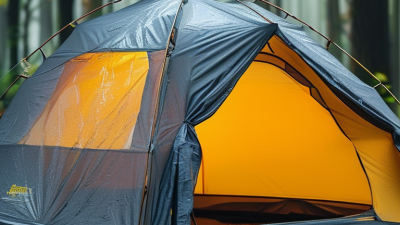
Choosing the best Strong Demon Tarp from China requires more than comparing color, price, or advertised thickness. Buyers should examine fabric weight, tensile strength, tear resistance, coating quality, seam construction, UV stability, and production consistency. A tarp that feels heavy may still fail at the corners after repeated folding.
The Allied Market Research report, “Tarpaulin Sheets Market,” estimated the global market at approximately USD 7.1 billion in 2022. It also projected continued growth through 2032, driven by construction, transport, agriculture, and outdoor storage. These figures show demand, but they do not prove that every Chinese supplier offers dependable quality. Supplier audits still matter.
For a practical review, request GSM records, sample test results, welding or stitching specifications, and clear photos of reinforced eyelets. Check whether the polyethylene or PVC coating remains flexible after bending. Small details matter. A brittle edge can expose the woven fabric within weeks.
As textile-quality specialist Dr. Subhash K. Bhatia reportedly observed, “A protective fabric is only as reliable as its weakest seam.” This principle fits every Strong Demon Tarp evaluation, especially when products face wind, rain, sunlight, and repeated handling. However, this quotation should be verified against the original interview or publication before formal use. That is an important limitation.
The strongest candidate is not always the cheapest or thickest tarp. It is the product supported by transparent testing, stable manufacturing, responsive communication, and realistic performance claims. Mistakes happen when buyers trust catalog language without inspecting physical samples.
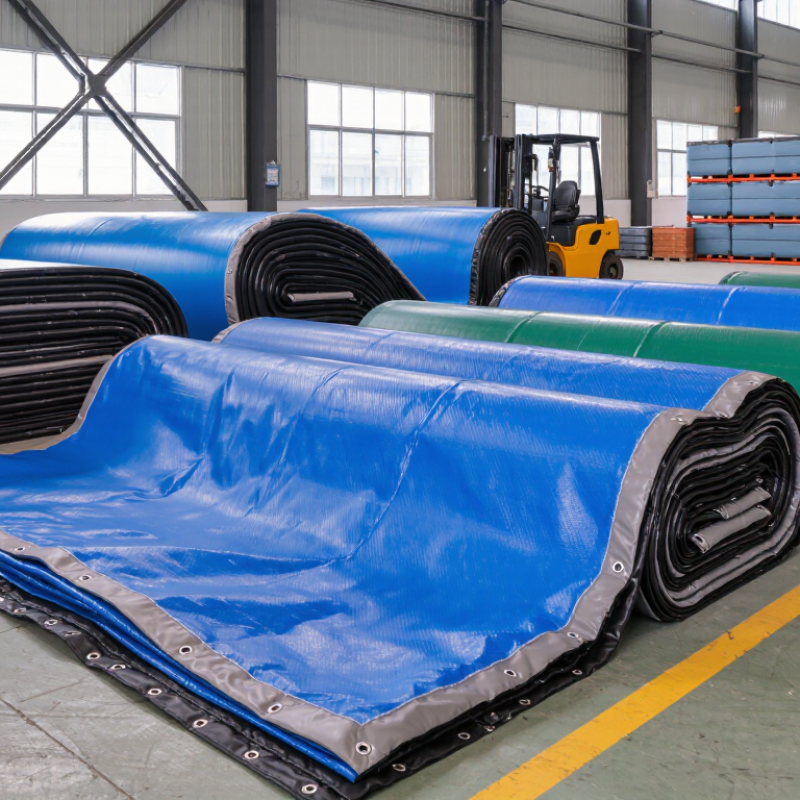
What Is the Best Strong Demon Tarp from China?
“Strong demon tarp” is not a recognized technical classification. In sourcing language, it usually describes a heavy-duty, waterproof tarpaulin for construction, transport, agriculture, or outdoor storage. The material normally uses woven polyethylene or PVC-coated polyester. A dependable specification should state fabric weight, tensile strength, tear strength, coating thickness, and seam performance.
Grand View Research estimated the global tarpaulin sheets market at approximately USD 8.6 billion in 2022. Its report also projected about 5.1% annual growth through 2030. This demand reflects stricter expectations for weather resistance and longer service life. For Chinese production, buyers should request test evidence based on ISO 1421 for tensile strength and ASTM D751 for coated-fabric performance. A 600-denier fabric may look tough, but denier alone proves little. It can still fail at a poorly welded seam.
Strong tarp features include a tight woven base, balanced coating, reinforced corners, and corrosion-resistant grommets spaced evenly along the edge. UV stabilization matters in bright, hot locations. Waterproofing should be tested after folding, stretching, and repeated exposure. A practical inspection checks pinholes under backlight and measures thickness at several points. Some supplier claims remain vague. That deserves questioning. Request a production sample, batch test report, and clear tolerance range before placing a large order. This small step can reveal uneven coating, weak hems, or misleading weight figures.
| Evaluation Dimension | Recommended Specification for a Strong Tarp | Why It Matters | Practical Inspection Method |
|---|---|---|---|
| Base Material | Woven high-density polyethylene (HDPE) or polyethylene-coated polyester fabric | Woven reinforcement provides better tear resistance than an unsupported plastic film, while the coating improves water resistance. | Check that the fabric has a visible woven grid and that the coating is evenly bonded on both sides. |
| Fabric Weight | 180–300 g/m² for general heavy-duty outdoor use; 300 g/m² or more for demanding applications | Higher fabric weight generally indicates more material and improved abrasion resistance, although construction quality is also important. | Confirm the average weight from a representative sample rather than relying only on the printed specification. |
| Water Resistance | Waterproof coated surface with sealed or well-finished seams | A waterproof panel can still leak through stitching, pinholes, or poorly finished hems. | Apply water to the surface and inspect the reverse side, hems, corners, and stitched areas for seepage. |
| Tensile Strength | Preferably at least 700 N per 5 cm in both warp and weft directions for heavy-duty use | Tensile strength indicates how well the tarp withstands steady pulling forces during covering and tie-down operations. | Request laboratory test results that identify the test method, direction, sample condition, and unit of measurement. |
| Tear Strength | Preferably at least 100 N in each principal direction for reinforced outdoor tarps | High tear strength helps stop a small cut or puncture from spreading under wind or handling stress. | Examine reinforced corners and perform a controlled tear test on a production sample when appropriate. |
| Thickness | Approximately 0.20–0.35 mm, depending on fabric weight and construction | Thickness contributes to durability and handling characteristics, but a thicker tarp is not automatically stronger. | Measure several points with a suitable thickness gauge and compare the variation across the sheet. |
| UV Resistance | UV-stabilized material suitable for extended outdoor exposure | Ultraviolet radiation can make untreated polyethylene brittle, faded, and more likely to crack. | Ask for accelerated-weathering data or a documented UV-stabilizer specification; inspect for uniform color and coating. |
| Hem Construction | Folded and reinforced hems with continuous webbing or multiple rows of stitching | The perimeter receives concentrated loads from ropes, wind, and repeated folding. | Check that the hem is continuous, flat, securely stitched, and free from skipped or loose stitches. |
| Grommets and Tie-Down Points | Rust-resistant metal or reinforced polymer grommets, typically spaced about 0.5–1.0 m apart | Closely spaced, reinforced tie-down points distribute load and reduce stress on individual attachment areas. | Pull each grommet area by hand and check for backing patches, distortion, sharp edges, or weak attachment. |
| Seam Design | Double-stitched or heat-sealed seams, with seam reinforcement at corners and high-stress locations | Seams are common failure points and must resist both water penetration and mechanical loading. | Inspect the seam line for consistent stitching, straight alignment, secure thread ends, and complete sealing where specified. |
| Temperature Range | Common polyethylene tarp service range: approximately −30°C to 70°C, subject to the formulation | Low temperatures can reduce flexibility, while high temperatures may soften or deform the coating. | Request the supplier's technical data and evaluate flexibility after exposure to the intended operating temperatures. |
| Color and Surface Finish | Uniform color, smooth coating, and no visible pinholes, bubbles, cracks, or delamination | A consistent surface usually reflects better coating control and helps maintain weather resistance. | Inspect the tarp under bright, even lighting and hold it against light to identify pinholes or thin areas. |
| Size Accuracy | Finished dimensions clearly stated, with allowance for hems and edge construction | Actual usable coverage can be smaller than the nominal cut size after folding and reinforcement. | Measure length and width after the tarp has been laid flat, and compare the result with the approved specification. |
| Quality Documentation | Material specification, inspection report, care instructions, and applicable test results | Traceable documentation makes it easier to compare products and verify production consistency. | Ensure documents identify the material, test method, test date, sample basis, and acceptance criteria. |
| Best Overall Profile | Heavy-duty woven fabric, 180–300 g/m² or higher, UV stabilization, reinforced hems, closely spaced grommets, and tested tensile and tear performance | This combination balances strength, weather resistance, service life, and practical ease of use. | Evaluate the complete construction rather than selecting solely by weight, color, or advertised thickness. |
Note: Performance values are practical reference ranges for heavy-duty outdoor tarps. Actual suitability depends on material formulation, manufacturing quality, dimensions, installation method, climate, and the relevant test standard.