Why Choose a D Ring Truck Vinyl Tarp?
Choosing the right cover begins with understanding the work, not just the product name. The American Trucking Associations’ American Trucking Trends 2024 reports that trucking carries about 72.6% of domestic freight tonnage in the United States. That scale creates constant demand for secure, reusable cargo protection. A D Ring Truck Vinyl Tarp can support this need with reinforced attachment points, flexible vinyl fabric, and practical handling during loading.
Small details matter. Heavy-duty D rings help distribute tie-down pressure across the tarp edge. Properly positioned straps can reduce flapping around steel coils, lumber, machinery, or palletized goods. Vinyl also resists rain, road spray, and routine abrasion better than many lightweight covers. Still, material thickness and stitching quality vary widely. The label alone proves little.
Federal Motor Carrier Safety Administration guidance, including 49 CFR 393.100–393.136, emphasizes preventing cargo movement and using suitable securement equipment. This is not a substitute for inspecting every load. The FMCSA rules focus on securement performance, while the tarp protects cargo from weather and debris. Both functions matter.
In practical use, operators should check D rings for bending, inspect seams for separation, and remove tarps with cuts near stress points. A 2023 U.S. Department of Transportation freight outlook also highlights the continuing importance of reliable highway freight operations. That context makes durability more than a purchasing preference. It becomes a daily cost and safety consideration. A D Ring Truck Vinyl Tarp is not magic. Its value depends on correct sizing, careful installation, and honest inspection.
What Is a D-Ring Truck Vinyl Tarp?
Why Choose a D Ring Truck Vinyl Tarp?
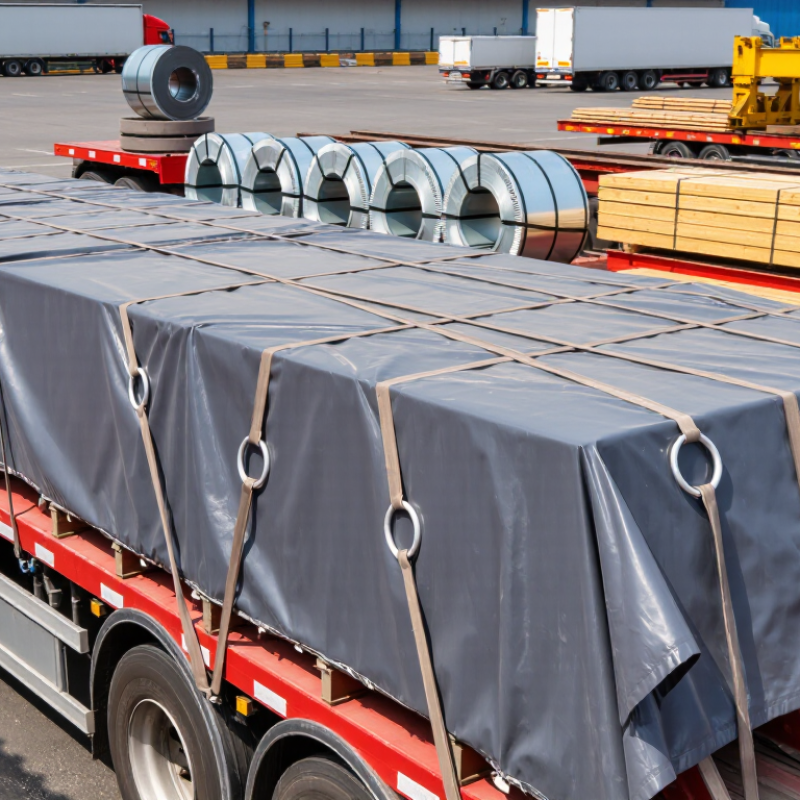
A D-ring truck vinyl tarp is a heavy-duty cover made from vinyl-coated fabric, with reinforced D-rings sewn along its edges. These rings connect to straps, ropes, or hooks, helping the tarp stay positioned over cargo during transport. Unlike a simple sheet, it combines waterproof coverage with controlled tie-down points. The material helps resist rain, road dust, sunlight, and moderate abrasion. Still, it is not a substitute for proper cargo securement.
The U.S. Bureau of Transportation Statistics reported that trucks carried about 72% of domestic freight tonnage in 2022. That scale shows why dependable cargo protection matters. In daily use, a well-fitted tarp can reduce water exposure when a load crosses open highways. Its reinforced edges also help limit tearing around attachment points. I have found that loose fabric causes more trouble than expected. Wind can create loud flapping, edge wear, and shifting tension.
The Federal Motor Carrier Safety Administration requires cargo to be secured against movement, including sliding and tipping. A D-ring tarp supports that process, but it does not replace rated tie-down equipment or inspection. Check the stitching, rings, webbing, and surface before every trip. Small cuts deserve attention. Vinyl can look serviceable while hidden damage spreads underneath. Choosing the correct size remains important, and this is where many buyers misjudge the load shape. A little extra coverage is useful, but too much material can collect wind.
How D-Ring Vinyl Tarps Secure Truck Loads
A D Ring Truck Vinyl Tarp helps secure truck loads by combining durable fabric with reliable tie-down points. Its reinforced D-rings spread tension across the tarp edge. This reduces stress on one small area. During loading work, I check that each ring sits beside a strong anchor point. The tarp should cover the load completely, including sharp corners and uneven surfaces. Heavy vinyl resists rain, road dust, and repeated handling. It also stays flexible in changing temperatures, though very cold material can become less cooperative.
Good restraint depends on more than the tarp alone. I position straps through suitable D-rings and tighten them evenly across the load. Edge protectors help prevent abrasion where cargo presses against the vinyl. The tarp must stay smooth, without loose pockets that can catch wind. A loose corner can become a serious problem. Before departure, I inspect seams, grommets, rings, straps, and anchor points. After several miles, I recheck the tension because vibration may create slack. This step is easy to skip. It should not be. A D-ring tarp supports a secure load, but it cannot correct poor loading, weak anchors, or incorrect tie-down methods. Following applicable cargo securement requirements and the vehicle manufacturer’s guidance keeps the system dependable.
Key Materials and Features of D-Ring Truck Tarps
A D-ring truck vinyl tarp earns its value through materials that handle daily friction, rain, and changing temperatures. Most reliable tarps use vinyl-coated polyester, combining a strong woven core with a water-resistant outer layer. The coating also simplifies cleaning after dusty roads or light cargo spills. Look closely at the fabric weight. Heavier material often resists abrasion better, but it can be harder to fold alone. That trade-off matters.
D-rings need more than shiny metal. They should be firmly sewn into reinforced hems, with extra fabric distributing tension around each attachment point. Steel or corrosion-resistant hardware helps maintain dependable tie-down performance in wet conditions. Webbing, corner patches, and double-stitched seams are equally important. In practical use, a tarp can fail at a seam before the main sheet tears. I have seen small edge weaknesses become larger problems after repeated highway wind. This is why consistent stitching deserves as much attention as thickness.
A well-designed D-ring tarp should fit the truck bed without excessive slack. Loose sections can collect water, while excessive tension may strain rings and corners. Measure the bed, consider the cargo height, and check where tie-down points sit. Inspect the tarp before each trip for cuts, loose stitches, or distorted rings. Dry it fully before storage. No material is maintenance-free. Even a durable vinyl tarp needs honest inspection and replacement when damage exceeds a safe repair.
Why Choose a D-Ring Truck Vinyl Tarp?
Key materials and practical features that support secure, weather-resistant truck loads.
Vinyl-Coated Polyester
A common truck-tarp construction combining polyester strength with a flexible, waterproof PVC coating.
Reinforced D-Rings
D-rings are typically attached to reinforced patches or webbing to distribute tie-down forces and reduce edge stress.
Sealed Construction
Welded or sealed seams, reinforced hems, and corrosion-resistant hardware help improve weather protection and service life.
The chart shows representative industry specification ranges for fabric weight in ounces per square yard. Actual values vary by construction, coating, reinforcement, and intended load.
Choosing the Right D-Ring Tarp for Your Truck
Choosing the right D-ring truck vinyl tarp starts with accurate measurements, not the tarp color. Measure the truck bed length, width, side height, and rail spacing. Add enough overlap to cover the load without dragging on the road. A tarp that barely reaches the corners may split when wind pulls against it. Too much material can flap, collect water, and hide loose cargo. Measure twice. It sounds basic, yet rushed measurements cause many fitting problems.
Match the vinyl weight to the work. A lighter tarp suits occasional, light-duty coverage, while a heavier reinforced sheet handles repeated use and rougher loads. Inspect the D rings closely. They should be firmly stitched or heat-welded into reinforced patches, with even spacing along the edges.
Check the ring size against your hooks, straps, or anchor points. A strong tarp can still fail when the hardware is mismatched. Look for sealed seams and a surface that resists water, sunlight, and abrasion. No tarp is indestructible.
Before buying, consider how the tarp will be tightened. D rings support balanced tension, but they do not replace proper tie-down technique. Leave no loose corners, and keep straps away from sharp metal edges. Test the fit with an empty bed, then with the usual load height. This small trial often reveals blocked tailgates or unreachable anchor points.
Frequent outdoor parking may justify heavier vinyl and stronger reinforcement. I would not choose by thickness alone. Some thick tarps are awkward to handle, and convenience affects whether the cover gets used correctly. That compromise is easy to miss during an online purchase.
Proper Installation and Maintenance Practices
A D-ring truck vinyl tarp works well when its installation matches the load and the road conditions.
Proper installation starts with checking the tarp, D-rings, straps, and tensioners for damage. I measure the cargo area before choosing the tarp size. The cover should overlap the load without dragging near the wheels. I center the tarp carefully, keeping seams away from sharp corners. Each strap should connect evenly and remain snug, not painfully tight. My own early installations were too tight. That stress weakened several attachment points. I now retighten straps after a short test drive. Follow vehicle instructions and applicable cargo-securement requirements.
Maintenance begins after every trip, especially through rain, dust, or winter grit.
I rinse the vinyl with clean water and use a mild cleaner when dirt sticks. The tarp must dry fully before storage. Trapped moisture can encourage mildew and unpleasant odors. I inspect seams, D-rings, edges, and grommets under bright light. Small tears need compatible vinyl repair material before they spread. A worn D-ring should be replaced, not simply pulled harder. I once ignored a loose grommet, and wind enlarged the opening within one trip. Store the tarp loosely rolled in a cool, shaded place. Avoid dragging it across gravel or folding it while cold. Keep a simple inspection record for repeated routes.